Rooftop Greenery
Discover how rooftop greenery can improve building performance, air quality, and wellbeing. Learn about the two main types, green roofs and roof gardens.
Last updated 24 August 2026
Benefits of Rooftop Greenery
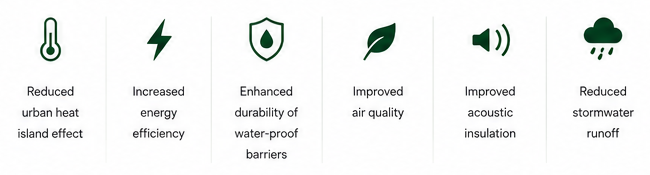
Rooftop greenery refers to the greening efforts and landscaping on the rooftop. When appropriately designed, rooftop greenery can significantly improve building performance, and the benefits includes:
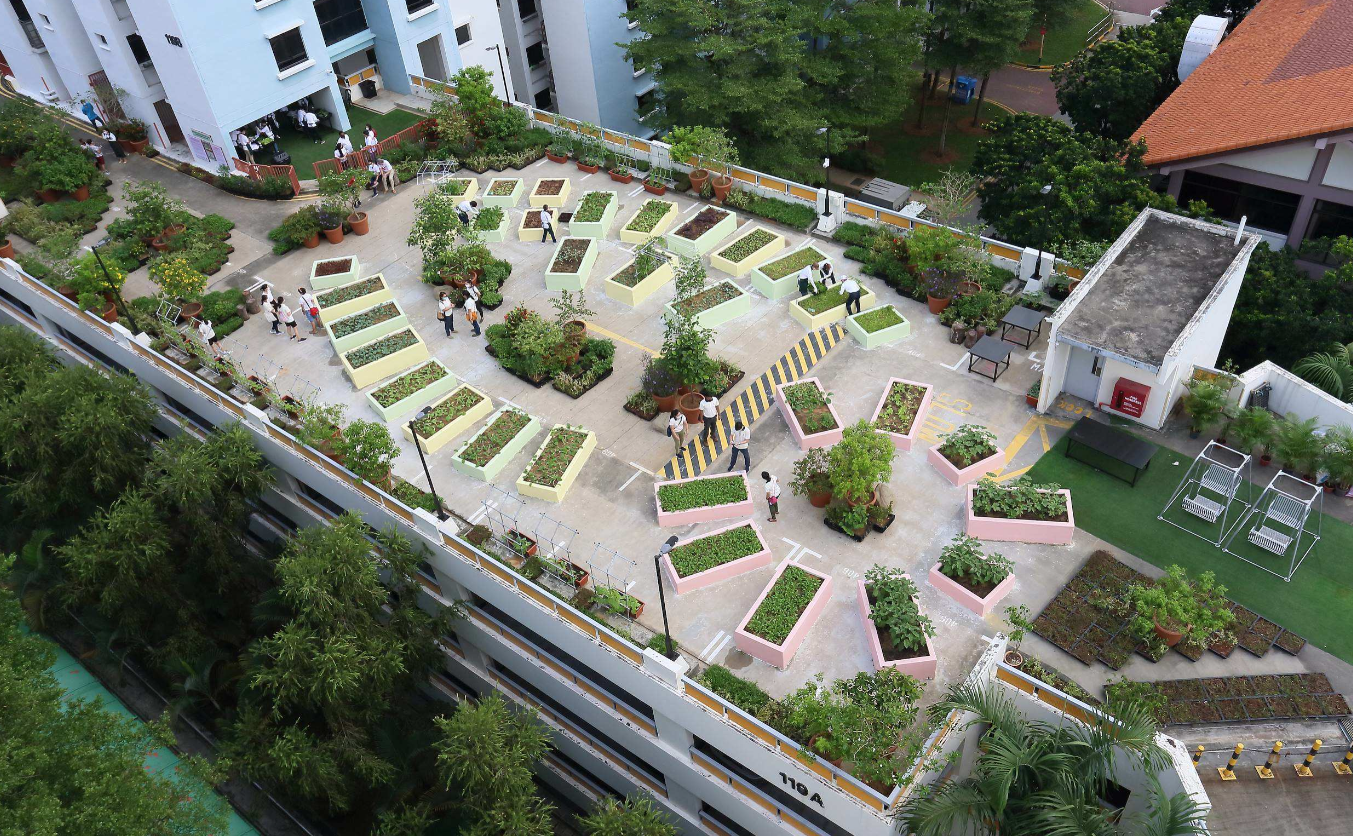
The Giving Garden@Kim Tian West
In general, there are two types of rooftop greenery:
Green roofs (extensive)
Roof gardens (intensive)
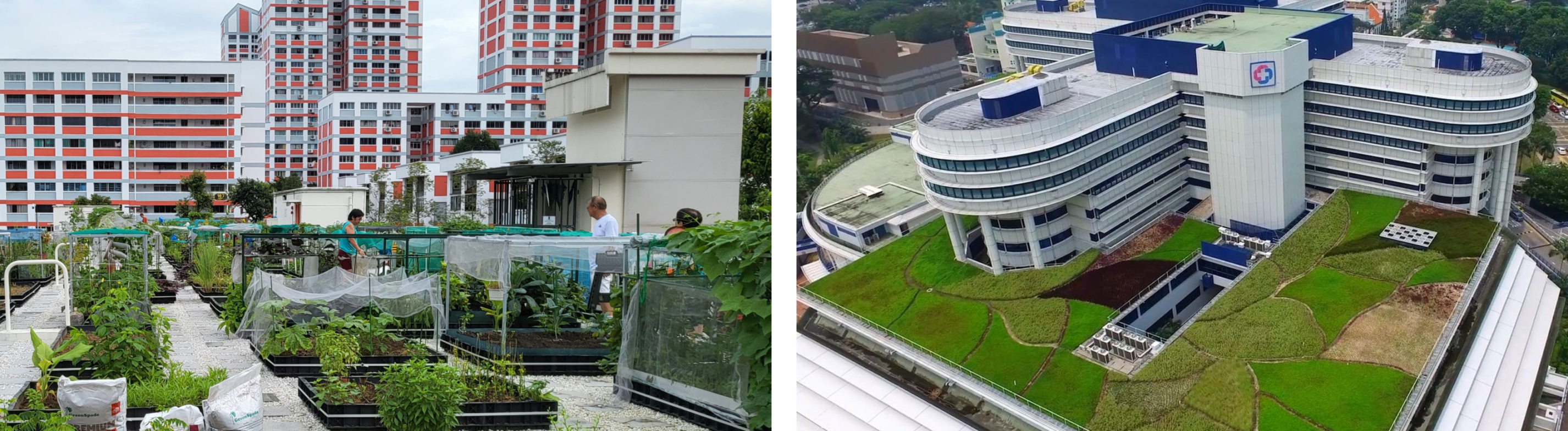
Photographs showing an intensive roof garden (left) on a multi-storey carpark and an extensive green roof (right) on a public healthcare institution
Types of Rooftop Greenery
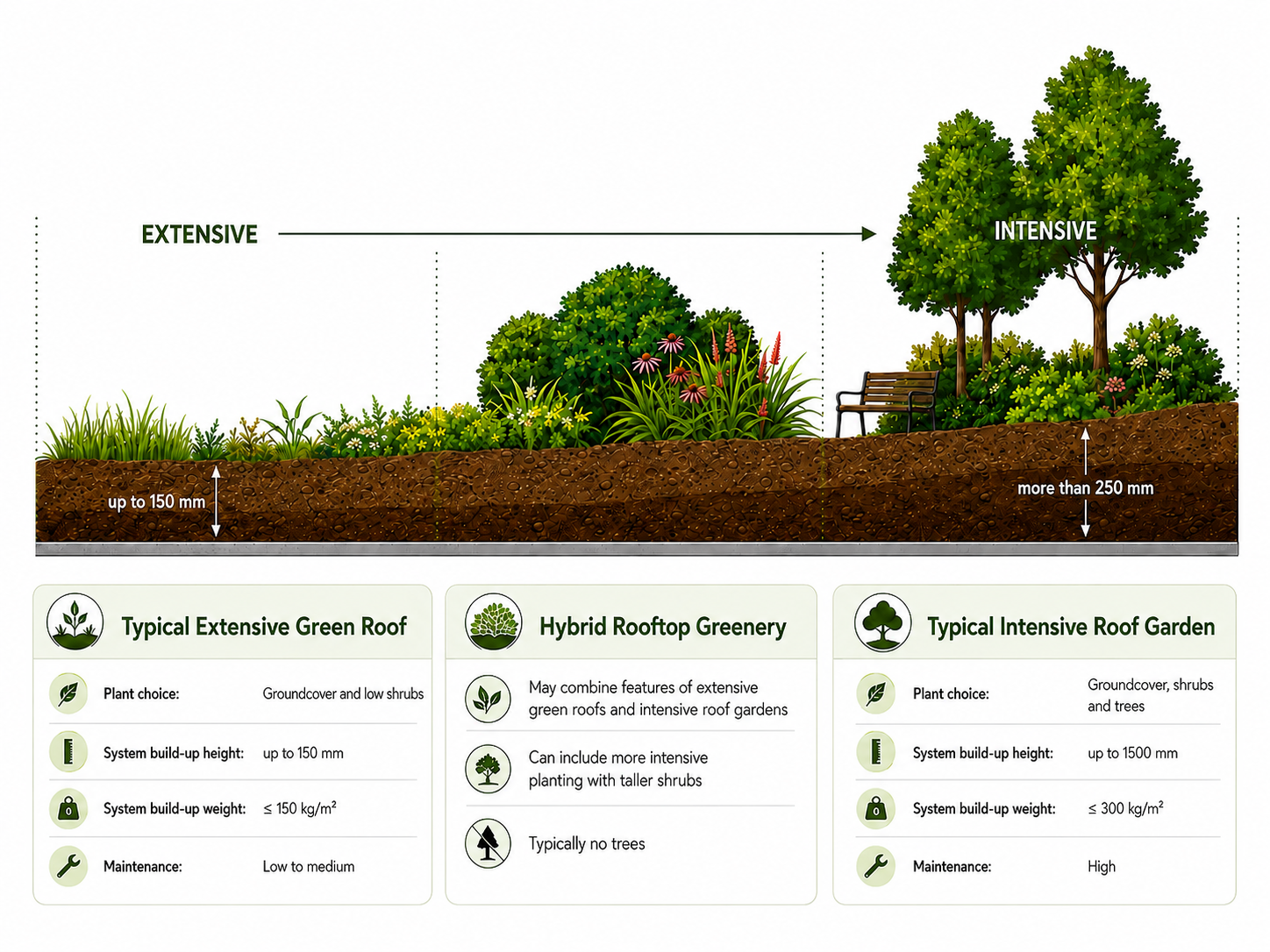
Rooftop greenery refers to vegetation installed on roof surfaces. The two main forms are Extensive Green Roofs and Intensive Roof Gardens. The illustration below shows the spectrum from extensive to intensive rooftop greenery.
Green Roof (Extensive Rooftop Greenery)
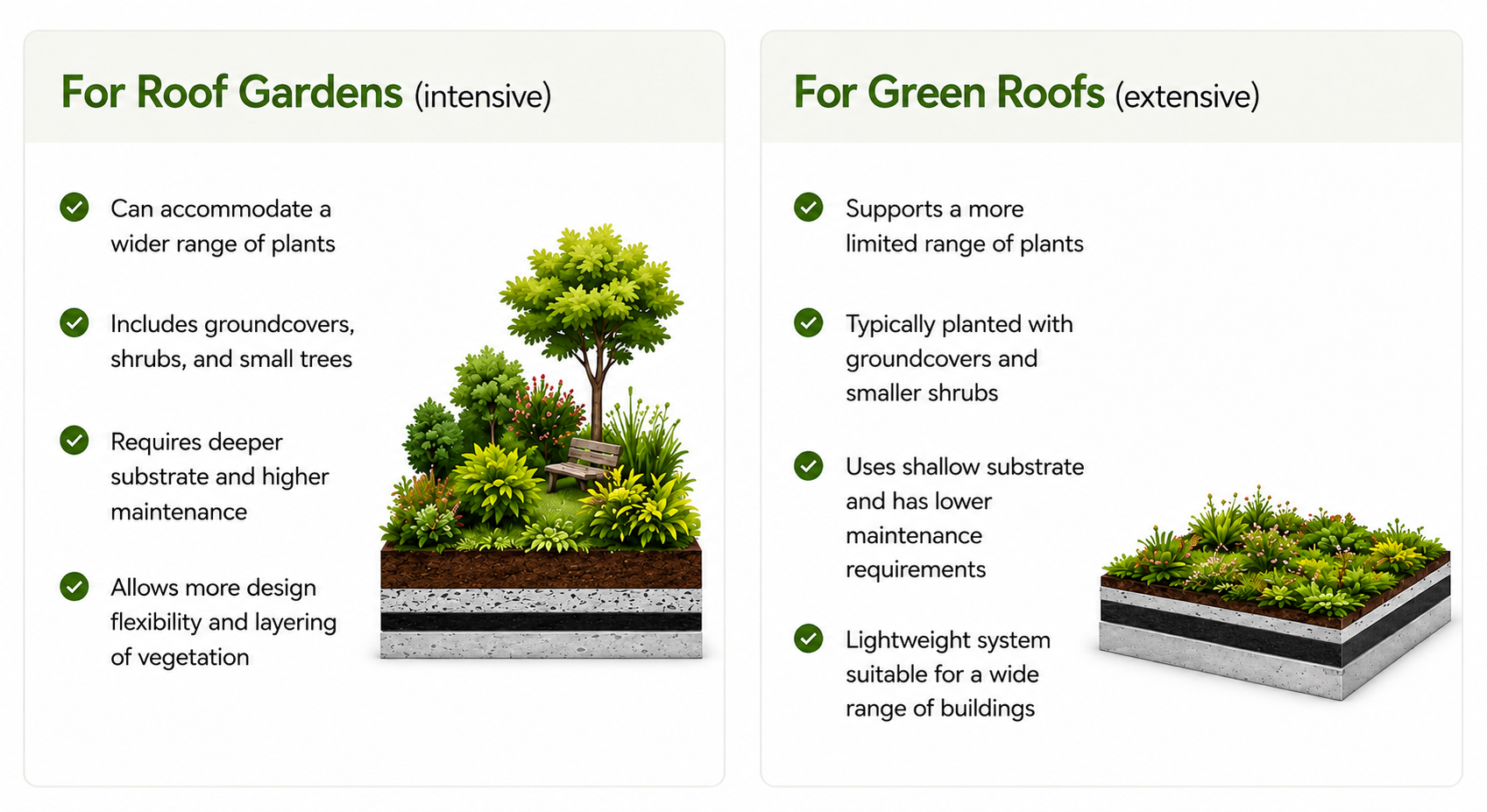
Green roofs are considered extensive in nature and are generally not designed for active recreational use. They are developed mainly for aesthetic and ecological benefits. Generally, these type of roofs are low in installation costs, lightweight (90 - 150 kg/m2) and require minimal maintenance.
Roof Garden (Intensive Rooftop Greenery)
Roof Gardens, on the other hand, are considered intensive in nature and are designed to be accessible. They are often used for recreation and social gatherings, offer spaces for respite and contribute to mental wellbeing.
Components of the Green Roof System
There are five basic components to a green roof system:
Vegetation/Plant layer
Substrates and media layer
Filter layer
Drainage and storage cells layer
Protection membrane and root barrier layer
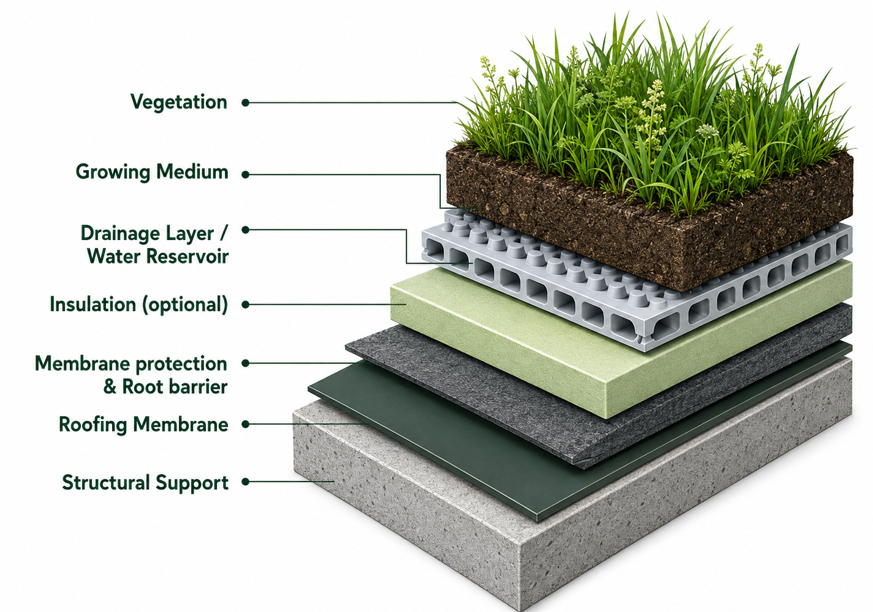
Typical cross-section of a green roof system. Extensive and intensive green roof systems differ primarily in the thickness and type of growing medium, as well as the species of plants used.
Though there are different systems and technology used in the industry, all of them are based on the same component principles. These systems are designed differently in order to meet various site conditions and needs.
The green roof system of an intensive rooftop garden needs a more substantial depth of the substrate/ soil media layer to accommodate the healthy growth of a wider variety of plant species, as compared to a simple extensive green roof.
Rooftop Greenery Systems
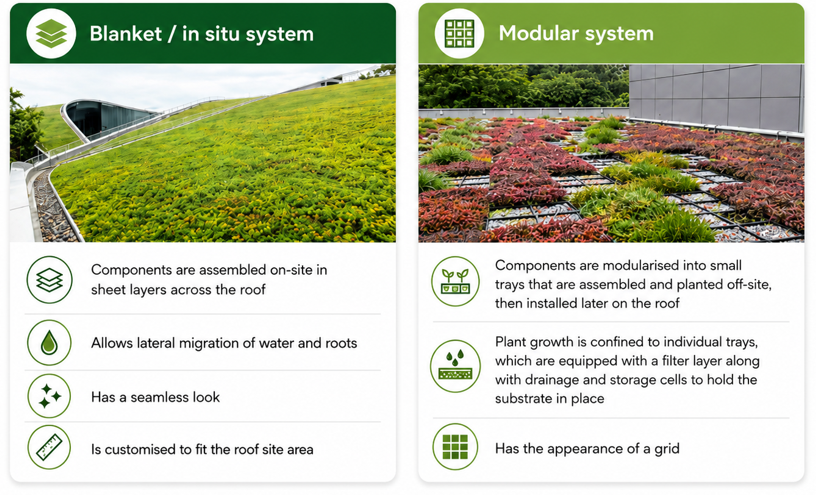
Two commonly used rooftop greenery systems are blanket / in situ systems and modular systems. While modular systems are mainly used for extensive green roofs, blanket systems can be used for both intensive and extensive form.
Plant Selection
Plants chosen for rooftop greenery should typically be able to thrive in drier rooftop conditions, withstand intense sunlight, and tolerate low soil moisture.
Key factors to consider for Plant Selection
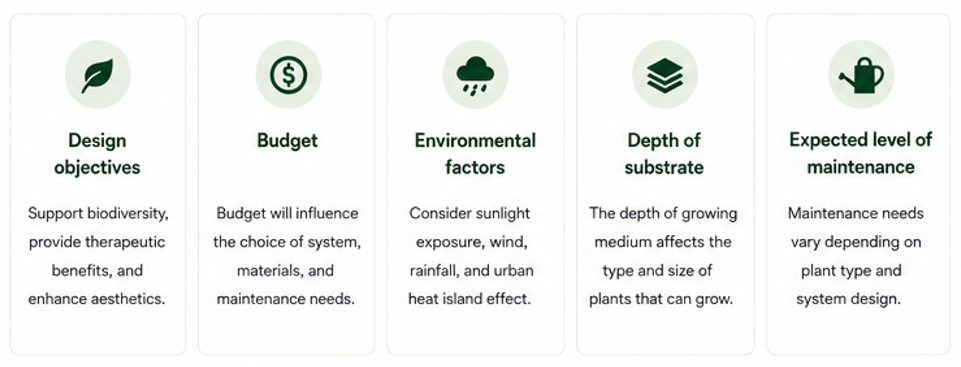
These factors should be considered alongside the type of rooftop greenery and the available substrate depth, as these influence the range and size of plants that can be supported.
Planting for different Rooftop Greenery types
Head to our plant resources page for recommendations of plants for rooftop greenery.
Explore Vertical Greenery
Discover another form of skyrise greenery and learn how vegetation can be integrated into building façades and vertical surfaces